Lucee Anders
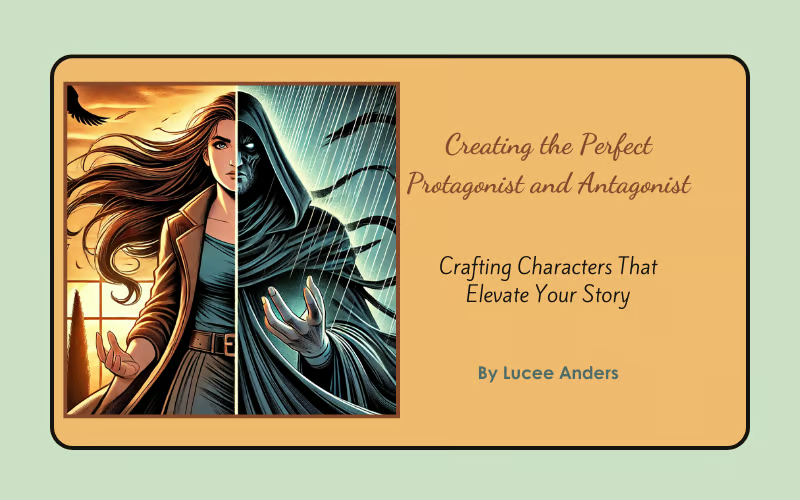
How to Create the Perfect Protagonist and Antagonist to Strengthen Your Story
By Lucee Anders
Characters are the soul of any good story. And at the centre of every unforgettable tale, you will usually find two central forces, the protagonist and the antagonist. These two characters are not just on opposite sides of a conflict. They represent opposing ideals, goals, or emotional journeys that form the heart of your narrative. Their interaction shapes everything, from the tension and pacing to the themes and resolution.
In this post, I will guide you through the process of creating a strong protagonist and antagonist. These characters should not only drive the plot but also reflect your story’s deeper meanings.
The Protagonist: Your Reader’s Anchor
Your protagonist is the lens through which readers experience your story. To make them memorable and emotionally resonant, they must be more than just a character on a mission. They must feel real.
They Need a Clear Goal
A strong protagonist has a defined desire or goal that motivates their actions. It might be love, justice, freedom, identity, or something as simple as survival. The more their goal is defined, the easier it is for readers to invest in their journey.
Ask yourself:
What does your protagonist want?
Why do they want it?
What are they willing to risk to get it?
These questions form the emotional foundation of your story.
Flaws Make Them Human
Perfection is dull. Readers want to follow characters who stumble, doubt themselves, and sometimes make the wrong choice. A believable protagonist should have flaws that challenge them and lead to growth. Whether it is fear, pride, impatience, or guilt, their weaknesses should shape their path through the story.
Growth is key. Your protagonist should evolve. They might not win every battle, but they must learn something by the end that transforms how they see themselves or the world.
They Must Be Relatable
A protagonist does not need to be likeable in every scene, but readers do need to care about them. Focus on giving your protagonist moments of vulnerability, honesty, or compassion. Let them show strength through their struggles, and readers will follow them anywhere.
The Antagonist: Not Just a Villain
The antagonist is often seen as the enemy, but they are far more than an obstacle. A great antagonist believes in what they are doing. In their mind, they are the hero of their own story.
Their Motives Must Be Clear
A strong antagonist is not just there to block the hero’s path. They must have their dreams, fears, and reasons for doing what they do. Revenge, control, justice, and redemption, the motive should be personal and strong.
Think of them as a shadow version of your protagonist. If your protagonist wants peace, your antagonist may want control. If the protagonist seeks truth, the antagonist may live by deception. Their goals should directly clash with the hero’s in a meaningful way.
Depth and Humanity
Avoid writing a one-dimensional villain who is simply “bad.” Instead, explore their backstory. What made them who they are? Do they believe they are doing the right thing? Do they have a code of honour? The more human they are, the more interesting your story becomes.
A tragic or sympathetic antagonist can blur the moral lines and challenge your readers to think deeply about justice, morality, and choice.
Personal Stakes Make It Powerful
Some of the best antagonist-protagonist relationships are built on shared history or emotional ties. Were they once friends? Siblings? Teacher and student? A personal connection makes the conflict far more emotionally charged and impactful.
Their Relationship: The Heart of the Conflict
Once you have created two rich characters with distinct goals and personalities, the real magic happens when you bring them into conflict.
They Should Reflect Each Other
The protagonist and antagonist should share something, like a belief, a goal, or a history, that links them. This similarity makes their differences more meaningful.
For example, both might want justice, but define it differently. Or they both seek love, but express it in opposite ways. This mirroring adds complexity and gives the story emotional depth.
Escalating Conflict Builds Tension
Every time they meet, whether in person or indirectly, the stakes should rise. Their conflict must evolve. As they challenge each other, both characters should be pushed to their limits, forced to grow, adapt, or change their perspective.
This dynamic keeps your story moving and keeps readers emotionally invested.
Themes Should Emerge From Their Struggle
The battle between protagonist and antagonist is more than a clash of goals; it is often a clash of values. Think about what larger themes your story explores. Power, love, redemption, revenge, identity. Whatever it is, make sure your main characters embody those themes in different ways.
This gives your story depth and makes it feel meaningful.
Bringing It All Together: The Resolution
The final confrontation or decision point between the protagonist and antagonist must feel earned. Readers need to see how the characters have changed throughout the story.
Perhaps your protagonist wins, but not without sacrifice. Or maybe the antagonist’s defeat leaves a lasting wound or a lingering question. The ending should not just resolve the plot; it should bring emotional closure and thematic resonance.
Let your characters feel the weight of their choices. That is what makes a story memorable.
Final Thoughts
Creating the perfect protagonist and antagonist is not about crafting heroes and villains. It is about building two fully realised individuals who reflect and challenge each other in meaningful ways.
When done well, their relationship becomes the backbone of your story, one that pulls readers in, holds their attention, and leaves them thinking long after they close the book.
So take your time. Explore what drives your characters. Let them be flawed, passionate, and deeply human. That is how you create conflict that matters and characters that live beyond the page.
Happy writing!
How to Create the Perfect Protagonist and Antagonist to Strengthen Your Story
© 2024 Lucee Anders. All rights reserved.