Lucee Anders
How I Turn an Idea into a Story: My Personal Process
By Lucee Anders
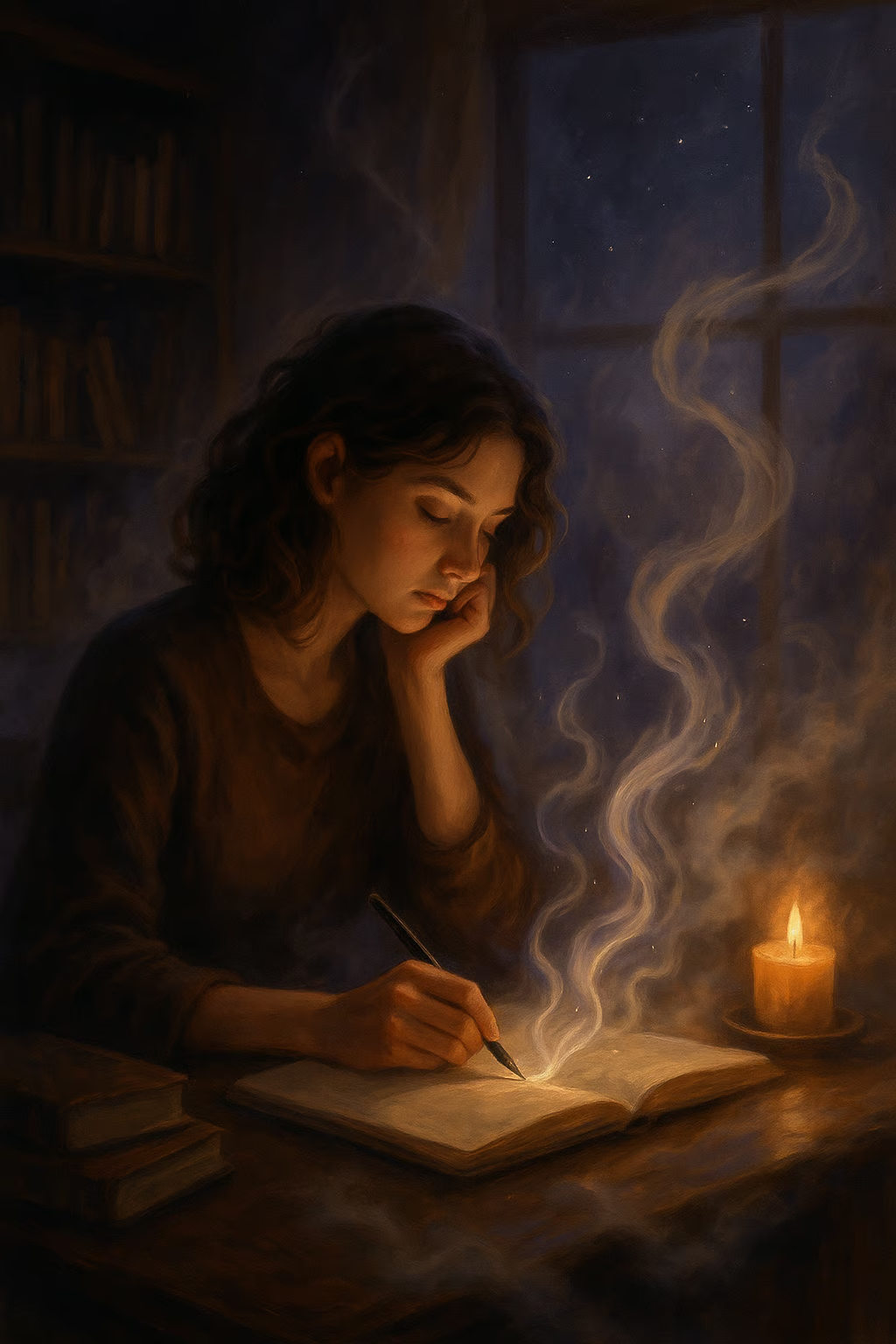
Ideas come to me like whispers through a crack in the universe. Sometimes it’s a word. A shadow. A strange phrase that clings to my thoughts like mist on a mirror. And sometimes it’s a feeling, an echo of something that doesn’t exist yet, but somehow insists it should. That’s how it always begins. Turning that whisper into a full-grown story, that’s the real work. It’s where the magic meets the mess.
In this post, I’m sharing how I go from a raw idea to a finished story (or at least a workable first draft). I hope it helps you understand not only my creative process, but perhaps also your own.
Step 1: The Spark (AKA: The Void Speaks)
Every story I’ve written begins with a seed. I don’t always know if it’s a short story, a novel, or something else. All I know is: it wants to be told.
Here are some of my most common story triggers:
A sentence that pops into my head while washing dishes.
A weird “what if” question, like What if people could steal emotions?
A title before a plot.
A visual image (a girl in a red coat, standing in an empty fountain).
A feeling, like longing or dread, without any characters or plot yet attached.
When this spark arrives, I jot it down, usually in a notebook or a messy file I call “Fragments.” It’s important that I don’t force the idea at this stage. If I try to develop it too soon, I smother it. I let it sit in the Void for a while. If it keeps echoing back, I know it wants more.
Step 2: Sitting with the Idea
Once something won’t leave me alone, I sit with it. Not write... not yet. I walk with it. Think about it while cooking or brushing my teeth. I give it space to grow roots.
During this stage, I ask questions like:
Who is this about?
Why is this story interesting to me?
What’s the strange element here?
What emotion does this idea carry?
This is also when I scribble vague fragments: potential character names, bits of dialogue, a possible opening line. It's disjointed and unorganised, and that’s exactly how I like it. I’m not outlining, I’m circling. Once the feeling or shape of the story becomes clearer, I move to the next step.
Step 3: The Container (Choosing the Form)
Some ideas feel like flash fiction. Others demand more breathing room, maybe even a novel. I try not to force a story into the wrong form just because I’m more comfortable with a certain length. A useful trick I use: I imagine telling the idea to someone aloud. If I can sum it up in one breath, it might be a short. If I can’t stop talking about the world, the rules, the layers, it might be longer. Once I’ve chosen the form, I treat it like choosing the right pot for a plant. Not too small, not too large. Just enough room for this story to thrive.
Step 4: Gathering Threads (Characters, Conflict, World)
This is my research-and-notebook phase.
I start building the basic bones:
Characters: Who is at the heart of this? What do they want, and what stands in their way?
Conflict: What’s the tension? What’s the cost of failure?
World: Is it our world? A speculative one? How do the rules of this place affect the story?
I often sketch mood boards (mental or literal), create rough timelines, or write character notes. This is also when I ask myself what I need from this story. What do I want to explore? And if the story feels too safe, I look for what’s missing. Often, that’s where the heart of it is hiding.
Step 5: The Skeleton Draft
Now, finally, I let myself write. I don’t aim for beautiful prose. I aim for shape. This is the skeleton draft: just the bones of the story, with the occasional glimmer of muscle. I write out of order if I must. I leave placeholders. Sometimes I skip descriptions entirely and just put “[weird forest scene here]” and move on.
The goal is completion, not perfection.
Step 6: The Quiet Before the Edit
Once the draft is done, I don’t touch it for a while. This part is critical for me. I need distance to edit properly. I’ll usually work on something else for a week or two. (Yes, even if the story is exciting. Maybe especially then.) When I come back, I see the story more clearly. What worked. What didn’t. What’s just scaffolding and needs to be stripped away.
Step 7: Revision (Where It Starts to Feel Real)
I treat revisions like archaeology. I’m not rebuilding the story from scratch. I’m uncovering the story that was always trying to be born.
This stage involves:
Rewriting scenes for tone and clarity.
Cutting anything that doesn’t serve the heart of the piece.
Deepening character motivations and stakes.
Making the weird bits feel natural, even inevitable.
Revising can be tough, but it’s also the most satisfying part. I get to shape something that already exists.
Step 8: The Read-Aloud Test
Before I call anything “done,” I read it aloud. Every single word. It’s amazing what your eyes will skim over that your ears won’t forgive. Repetitions. Awkward rhythms. Flat dialogue. When I read aloud, I can hear if the story breathes or if it's still holding its breath.
Step 9: Letting It Go (or Sending It Out)
After a few passes, I either:
Add it to a collection (like Story Seeds from the Void),
Submit it to a publication, or
File it away for later use.
Some stories need to be shared immediately. Others need to age like wine. Some may never see the light, and that’s okay, too. They still taught me something.
Bonus Thoughts: Trusting the Mess
My process is not neat. It’s not linear. And I never fully “know what I’m doing.” But over time, I’ve learned to trust the mess. To recognise the feeling that tells me, 'This story is ready.'
If you’re struggling to move from idea to story, remember:
You don’t need to see the whole path before you begin.
An imperfect draft is better than a perfect unwritten idea.
Not every idea is a story, but every idea can lead to one.
Want to Try This Yourself?
I’m working on a free worksheet to help you shape your next idea into a story using the steps above. If you’d like to receive it when it’s ready, you can subscribe to my newsletter or keep an eye on my printables shop.
If this post resonated with you, I’d love to hear:
What’s the weirdest spark that ever became a story for you? Leave a comment or reply to one of my emails. I’m always curious how other writers listen to the Void.
Until next time, write what haunts you.
– Lucee
How I Turn an Idea into a Story: My Personal Process
© 2024 Lucee Anders. All rights reserved.