Lucee Anders
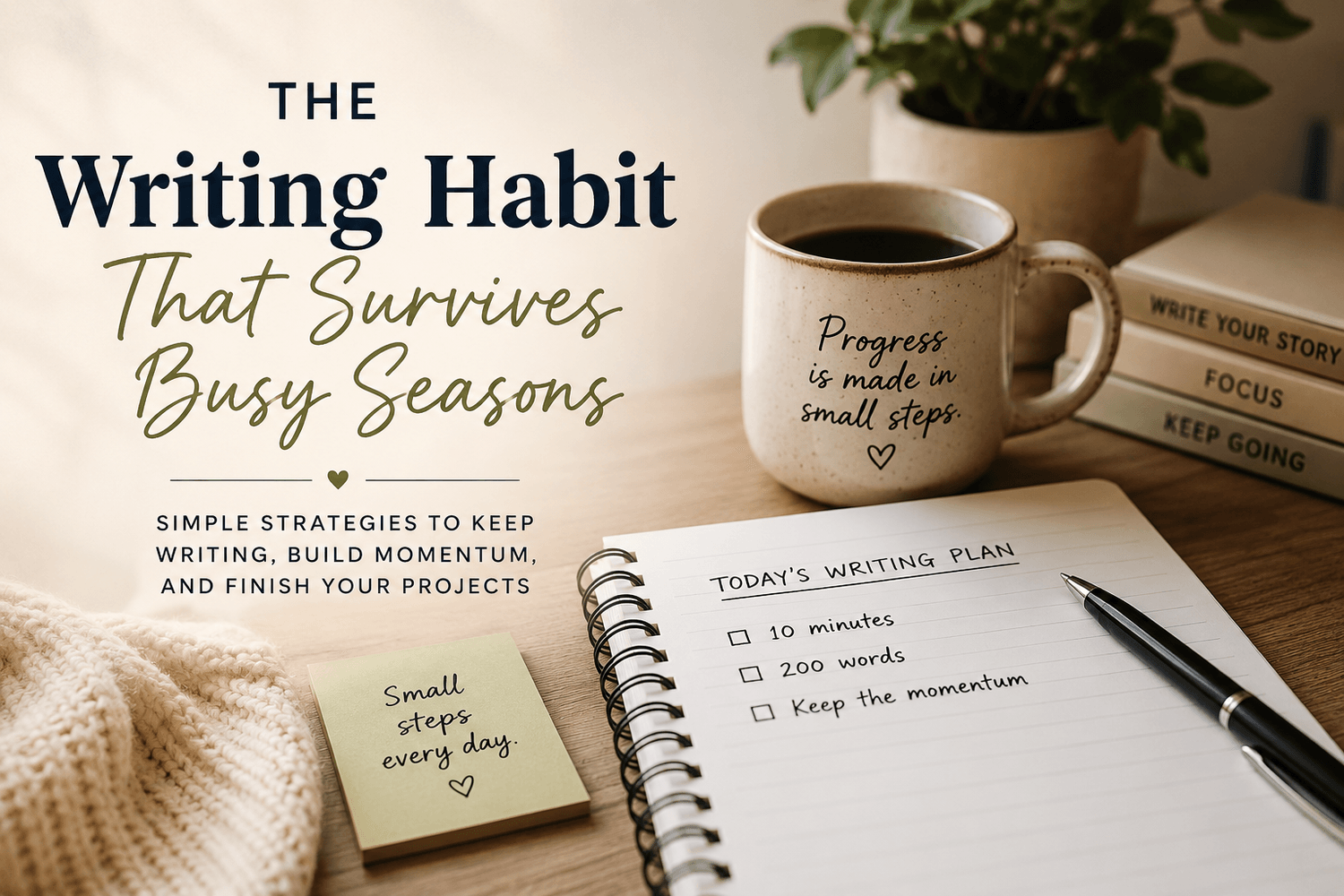
The Writing Habit That Survives Busy Seasons
By Lucee Anders
Most writing advice assumes that you have plenty of time to dedicate to your craft. You may have encountered suggestions like establishing a morning routine, setting aside an hour before work, or blocking out large chunks of uninterrupted time for creative endeavours. While these strategies are effective when life allows, what happens during those times when it doesn’t?
Life often keeps us busy, whether it’s caring for family, managing a full-time job, or simply trying to keep up with an endless list of responsibilities. Many writers find themselves believing they must pause their creative work until things calm down. Unfortunately, life tends to fill any gaps of free time with new challenges, making it feel as though we are always waiting for the right moment to write.
The writers who continue to make progress are not necessarily those with the most free time. Instead, they are the ones who learn to adapt their writing habits to fit their current circumstances. This adaptability is crucial, especially when life throws us curveballs.
Stop Waiting for Ideal Conditions
One of the biggest pitfalls for writers is the belief that they need perfect conditions to produce meaningful work. Many believe they require a quiet home, several uninterrupted hours, a surge of inspiration, or ample energy. While these factors can enhance creativity, they are rarely available on demand. If your writing routine depends on ideal circumstances, your progress will always be precarious.
Make Writing Smaller
To combat challenges in your writing routine, it’s important to establish a practice that can withstand the imperfections of daily life. One effective strategy is to scale down your writing tasks. When life gets hectic, many writers tend to shut down completely. Instead of succumbing to this inertia, consider setting smaller, more manageable goals. Rather than trying to write 2,000 words in one sitting, aim for just 200. Instead of drafting an entire chapter, focus on writing a single scene. If planning an entire article feels overwhelming, concentrate on brainstorming just five ideas. These smaller goals not only seem more achievable, but they also make it easier for you to maintain consistency in your writing.
Focus on Momentum, Not Output
Consistency matters much more than intensity, especially during busy periods. Success in writing isn't solely measured by word count; during these hectic times, maintaining momentum becomes the more valuable metric. Ask yourself: Did you engage with your project today? Did you think about it, even if just for a moment? Did you add a sentence or jot down a note for tomorrow? These small actions keep your creative connection alive and prevent you from drifting away from your work. The real danger isn’t writing slowly; it’s completely disappearing from your creative efforts.
Create a Minimum Writing Habit
Every writer should establish a minimum writing habit, which serves as a basic level of activity you can commit to even on challenging days. This could be as simple as writing 100 words, dedicating ten minutes to your craft, or opening your manuscript to revise a single paragraph. Your minimum habit should be achievable enough that you feel almost certain you won’t fail. The goal isn’t to produce outstanding work every day; rather, it’s about maintaining the habit, staying connected to your writing, and keeping the momentum going.
Give Yourself Permission to Be Imperfect
It’s important to give yourself permission to be imperfect. Perfectionism can be particularly harmful when you’re short on time. When each writing session feels precious, it can be challenging to start. Remember that first drafts are meant to be messy; you don’t need to create a masterpiece today. You only need to make some small progress with your work. This progress builds confidence, which in turn fuels motivation and leads to even more progress.
The Writers Who Finish
Writers who complete their work, those who publish novels, articles, and build long-term careers in creativity, aren’t always the most disciplined. Instead, they tend to be the most adaptable, learning to write not just when life is easy but also when it’s challenging. Most importantly, they refuse to let a busy season signal the end of their creative pursuits.
If you find yourself in a demanding season right now, instead of asking how much writing you can accomplish, consider asking yourself how little you can commit to doing consistently. Start small. Small steps taken regularly can lead to the completion of larger projects. Don’t underestimate the power of those little moments; over time, they add up to meaningful progress and ultimately contribute to a fulfilling creative life. Remember, writing is not just about the end goal; it’s also about the journey and the persistence in carving out time for your passion, no matter how busy life becomes.
The Writing Habit That Survives Busy Seasons | How to Keep Writing When Life Gets Busy
© 2024 Lucee Anders. All rights reserved.