Lucee Anders
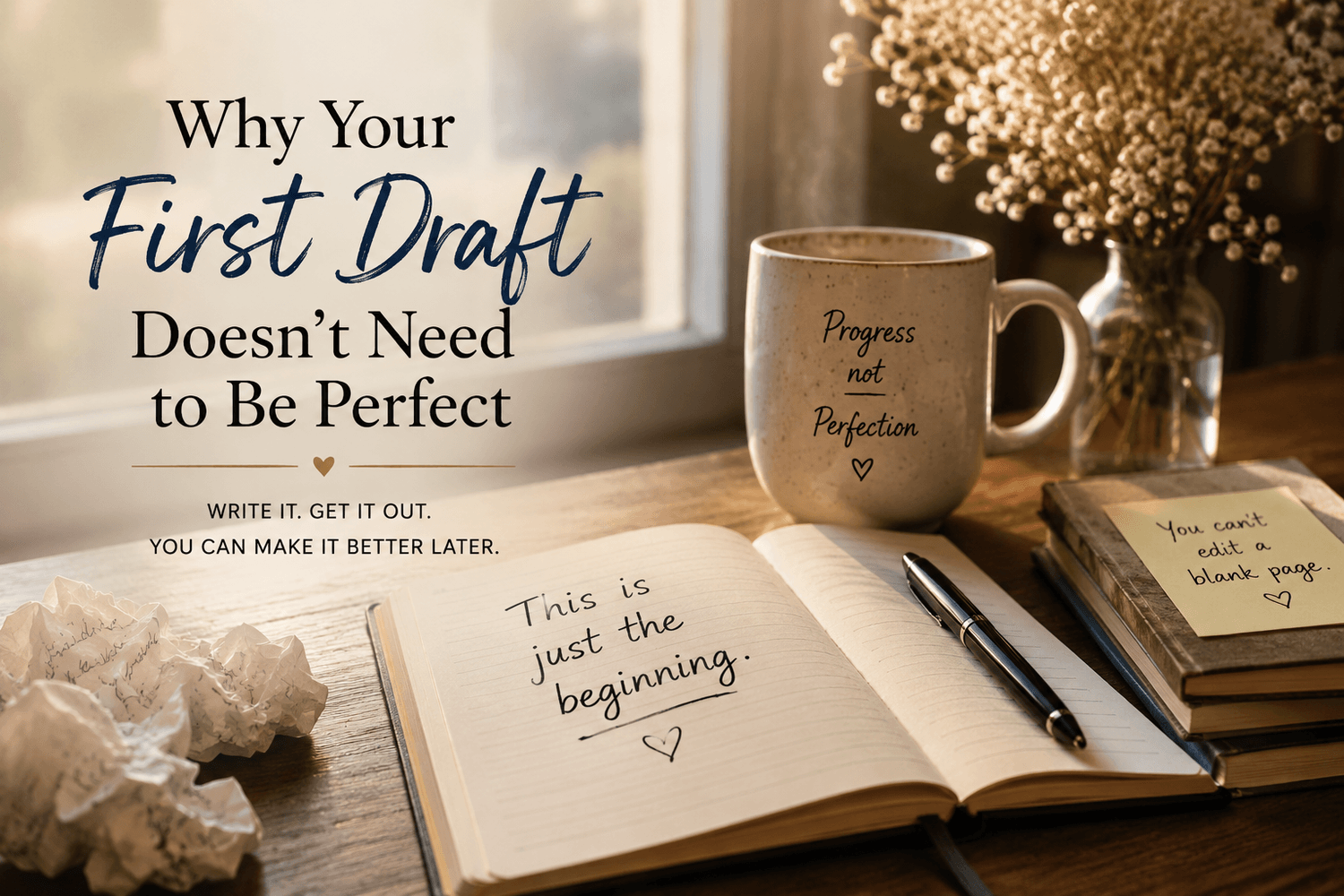
Why Your First Draft Doesn't Need to Be Perfect
By Lucee Anders
If you've ever stared at a blank page, afraid to write the wrong words, you're not alone. Perfectionism is one of the biggest obstacles writers face. It convinces us that every sentence must be polished before we move on, every chapter must be flawless, and every story must be worthy of publication from the very first draft.
The truth is far simpler. Your first draft doesn't need to be perfect. In fact, it shouldn't be.
The Purpose of a First Draft
Many writers make the mistake of treating a first draft like a finished manuscript. A first draft isn't meant to impress readers. Its purpose is to help you discover the story.
When you begin writing, you won't know everything about your characters, your world, or even your plot. As you write, you'll uncover details that weren't visible when you started.
Think of a first draft as exploration rather than construction. You're mapping unknown territory, not building a finished house.
Perfectionism Slows Progress
Perfectionism often disguises itself as high standards. While there's nothing wrong with wanting to produce quality work, perfectionism can become destructive when it prevents you from finishing.
Many writers spend hours rewriting the first chapter while the rest of the story remains unwritten. They polish the same pages repeatedly because moving forward feels uncomfortable.
The problem is that stories cannot improve if they don't exist. A completed draft gives you something to revise. An unfinished manuscript gives you nothing but frustration.
Give Yourself Permission to Write Badly
This advice may sound strange, but it can be incredibly freeing. Allow yourself to write badly.
Write awkward dialogue.
Write descriptions that feel clumsy.
Write scenes that don't quite work.
You can improve them later. Some of the most powerful scenes in a finished novel may have started as rough, messy paragraphs in an early draft. The goal is progress, not perfection.
Separate Writing and Editing
Writing and editing require different mindsets. Writing is creative. It thrives on curiosity and momentum.
Editing is analytical. It focuses on improvement and refinement.
Trying to do both at the same time often leads to frustration. When drafting, focus on getting the story onto the page. Save your critical eye for later revisions.
You'll be surprised by how much easier writing becomes when you stop trying to perfect every sentence before moving on.
A Simple Exercise
Set a timer for twenty minutes.
Choose a story idea and write continuously until the timer ends.
Do not edit.
Do not delete.
Do not reread.
Simply write.
The purpose of this exercise is to train yourself to value progress over perfection.
Final Thoughts
Every published book began as an imperfect first draft. The stories you admire were revised, edited, and refined over time.
Give yourself the same permission. Your first draft isn't the final destination. It's simply the beginning of the journey. And you can't improve a story that never gets written.
Why Your First Draft Doesn't Need to Be Perfect
© 2024 Lucee Anders. All rights reserved.